
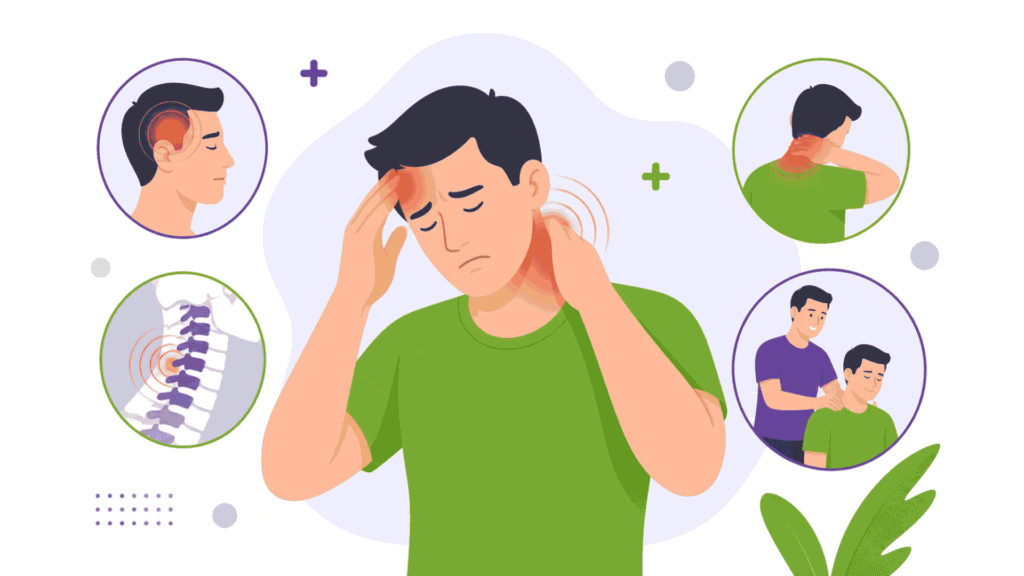
You wake up with a dull ache at the base of your skull.
At first, it’s subtle and easy to ignore. But as the day unfolds, the discomfort spreads. It moves upward, wrapping around your head like a tightening band. Maybe it settles behind your eyes. Maybe it pulses at your temples.
You call it a headache.
But what if that’s only part of the story?
What if the real source of the pain isn’t your head at all but your neck
Can Neck Pain Cause Headaches?
Let’s answer the question directly: can neck pain cause headaches?
Yes and it’s more common than most people think.
There’s even a medical classification for it: cervicogenic headaches, meaning headaches that originate from the cervical spine (your neck). These are a major example of how neck pain and headache symptoms are often deeply connected.
In fact, many people searching things like:
- can headaches be caused by neck pain
- neck pain headache
- headache related to neck pain
…are already experiencing this connection firsthand.
The Overlooked Connection Between Neck Pain and Headaches
Most people think of headaches as something happening entirely within the head. But the body doesn’t work in isolation, it works as an interconnected system.
The upper cervical spine shares nerve pathways with the trigeminal nerve, which carries sensation from your face and head. Because of this overlap, your brain can misinterpret signals.
So when something is wrong in your neck, tight muscles, joint restriction, or strain- it can be felt as a headache.
This is why neck and back pain can sometimes present with symptoms that seem unrelated at first.
Read more about neck pain here.
Signs Your Headache May Be Coming From Your Neck
Understanding whether your headache is neck-related is key to getting the right treatment.
Common signs of neck pain and headache occurring together include:
- Pain that starts at the base of the skull and moves forward
- A dull, steady ache rather than sharp or throbbing pain
- Headaches triggered by neck movement or posture
- Stiffness or limited range of motion in the neck
- Pain focused on one side of the head
- Tenderness in the neck, shoulders, or upper back
Some people also experience additional symptoms like:
- Dizziness or imbalance (leading many to ask: can neck pain cause dizziness?)
- Eye strain or pressure behind the eyes
These symptoms often worsen after long periods of sitting or screen use.
Can a Headache Cause Neck Pain?
This is where things get interesting.
Many people also ask: can a headache cause neck pain?
The answer is yes, it can go both ways.
Tension headaches or migraines can cause muscles in the neck and shoulders to tighten, leading to discomfort or stiffness. But in many cases, the neck issue comes first and triggers the headache.
So whether you’re searching:
- can neck pain causes headache
- can a headache cause neck pain
…it’s important to understand that the relationship is often cyclical. One condition can feed into the other.
Why It Happens: The Science Behind It
Your head weighs around 10–12 pounds when properly aligned. But when it shifts forward like when you’re texting or working at a computer, the load on your neck increases dramatically.
For every inch your head moves forward, the strain on your cervical spine can nearly double.
Over time, this leads to:
- Muscle fatigue and tightness
- Joint dysfunction
- Reduced mobility
- Increased nerve sensitivity
These changes can trigger pain signals that travel from the neck to the head.
Scientific studies, including research published in Cephalalgia and The Journal of Orthopaedic & Sports Physical Therapy, show that addressing cervical spine dysfunction can significantly reduce headache intensity and frequency.
In other words, treating the neck often relieves the headache.
Common Triggers to Watch For
Neck-related headaches are rarely random. They’re usually the result of repeated stress and habits over time.
Common triggers include:
- Poor posture (especially “tech neck”)
- Long hours sitting at a desk
- Stress and muscle tension
- Sleeping in awkward positions
- Previous injuries like whiplash
Because these habits are part of daily life, many people don’t realise they’re contributing to their neck pain headache symptoms.
Effective Treatment Options
If your headaches are linked to your neck, the goal is to treat the root cause,not just mask the symptoms.
1. Chiropractic Care
Chiropractic care focuses on restoring proper movement and alignment in the spine.
When the joints in your neck aren’t functioning correctly, they can create irritation that leads to headaches. Chiropractic adjustments help improve mobility, reduce tension, and support the nervous system.
Many patients dealing with headache related to neck pain find long-term relief through consistent care.
Learn more about chiropractic care here.
2. Postural Correction
Improving posture reduces the strain placed on your neck throughout the day.
Simple changes like adjusting your workstation, raising your screen, and keeping your head aligned can significantly reduce symptoms.
3. Strengthening and Mobility Exercises
Targeted exercises help support the muscles that stabilize your neck and upper back.
This reduces the likelihood of recurring neck pain and headache issues.
4. Soft Tissue Therapy
Releasing tight muscles in the neck and shoulders helps decrease tension and improve circulation, both of which reduce headache triggers.
5. Lifestyle Adjustments
Small, consistent habits can make a big difference:
- Taking breaks from screens
- Improving sleep posture
- Managing stress
These changes reduce the overall load on your cervical spine.
When to Seek Help
Occasional headaches are normal. But if you’re experiencing ongoing symptoms, it’s time to look deeper.
You should seek care if you have:
- Frequent or recurring headaches
- Persistent neck pain and headache together
- Limited neck movement or stiffness
- Headaches that don’t improve with medication
- Symptoms like dizziness or radiating pain
Because if the root cause is in your neck, treating the head alone won’t solve the problem.
The Takeaway
Your body is designed to work as one connected system.
So when you’re dealing with symptoms like neck pain or wondering can neck pain cause headaches, it’s important to look beyond the surface.
At Goddard Chiropractic, the focus isn’t just on temporary relief, it’s on identifying and treating the root cause of your pain. Whether you’re struggling with neck and back pain, recurring headaches, or posture-related tension, a personalized, science-based approach can help restore balance and improve your quality of life.
Because when you address the source, everything else starts to fall into place.