There’s something incredibly freeing about running. Whether it’s the quiet rhythm of your morning jog, the fresh air clearing your mind, or the sense of accomplishment after a long run, it’s a habit that supports both your physical and mental well-being. But when knee pain begins to show up sometimes as a dull ache, other times as a sharp, persistent discomfort, it can quickly take the joy out of every step.
If you’ve ever caught yourself wondering, “Why does my knee hurt after running?”, you’re certainly not alone. Knee pain after running is one of the most common concerns we see, affecting runners of all levels. The good news is that, in most cases, it’s not something you have to simply live with. With the right understanding and care, you can address the root cause and get back to running comfortably again.
At Goddard Chiropractic, we believe that when you understand why your body is reacting a certain way, you’re already halfway to fixing it.
Why Does Knee Pain Occur After Running?
Running places repeated stress on your joints, especially your knees. With every stride, your knees absorb several times your body weight. When your body is aligned and moving efficiently, it handles that stress quite well. But when there are imbalances whether in your muscles, joints, or movement patterns that load starts to shift in ways your knees aren’t designed to handle.
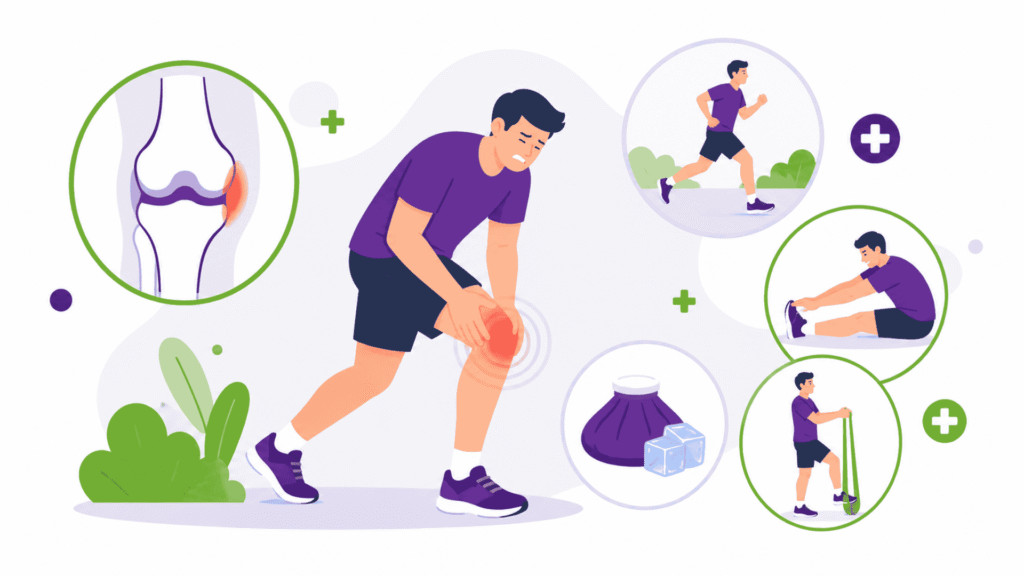
One of the most common causes is runner’s knee (patellofemoral pain syndrome). This often shows up as a dull ache around or behind the kneecap and tends to worsen after running, going up or down stairs, or sitting for long periods. It usually develops when the kneecap doesn’t track properly, often due to muscle imbalances or alignment issues.
If this sounds familiar, you may want to explore our knee pain condition page to better understand what could be going on and how it can be treated.
Beyond specific conditions, your running form, muscle strength, and even your footwear all play a role. The body works as a connected system, so when one area isn’t functioning properly, another area often the knees end up compensating.
Common Causes of Knee Pain After Running
Knee pain rarely comes from just one issue. More often, it’s a combination of factors that build up over time. Some of the most common contributors include:
- Poor running mechanics, such as overstriding or landing too heavily
- Muscle imbalances, especially weak glutes or tight hamstrings
- Overuse or sudden increases in mileage or intensity
- Improper or worn-out running shoes
- Joint misalignment in the hips, pelvis, or spine
Each of these factors may seem small on its own, but together they can place significant strain on your knees. Understanding which of these applies to you is an important step toward lasting relief.
How to Fix Knee Pain After Running
When it comes to fixing knee pain, the goal isn’t just temporary relief. It is to create a lasting change so you can keep running without discomfort.
One of the first things to focus on is simply listening to your body. Pain is not something to push through, especially when it becomes persistent. Giving yourself time to rest or temporarily reducing your mileage can allow inflammation to settle and prevent further irritation.
From there, improving your running form can make a surprisingly big difference. Small adjustments like shortening your stride, maintaining an upright posture, and landing more softly can significantly reduce the stress placed on your knees.
Building strength in the right areas is equally important. Your glutes, core, and leg muscles all play a role in stabilizing your body during movement. When these muscles are strong and working together, your knees are far less likely to become overloaded.
At the same time, incorporating regular stretching and mobility work can help relieve tension in tight areas like the hamstrings, hip flexors, and IT band. This improves overall movement and helps keep your joints properly aligned.
And of course, don’t overlook your footwear. Shoes that are supportive and suited to your gait can make a noticeable difference in how your body absorbs impact.
How Chiropractic Care Can Support Your Recovery
One of the most important things to understand is that knee pain is not always just about the knee itself. In many cases, the root cause lies elsewhere in the body.
At Goddard Chiropractic, we often find that misalignments in the spine, pelvis, or hips can change how force travels through your legs when you run. Over time, this uneven distribution of stress places extra strain on the knees, leading to discomfort.
Through gentle chiropractic adjustments and personalised care, we aim to restore proper alignment and improve the way your body moves as a whole. When your joints are functioning correctly, your muscles can work more efficiently, and your knees no longer have to compensate.
If you’re curious about how this approach works, you can read more about chiropractic care here and see how it can support both recovery and long-term performance.
When Should You Seek Professional Help?
While some soreness after running can be normal, there are times when it’s important to seek professional care. If your knee pain lingers, worsens, or begins to interfere with your daily activities, it’s worth having it assessed.
Addressing the issue early can help prevent more serious problems and get you back to doing what you enjoy much sooner.
Final Thoughts | Goddard Chiropractic
Knee pain after running can feel frustrating, especially when it disrupts something that brings you joy. But rather than seeing it as a setback, it can be helpful to view it as a signal, your body’s way of asking for a little extra care and attention.
With the right combination of rest, strengthening, improved movement, and supportive care, most runners are able to overcome knee pain and come back stronger than before.
At Goddard Chiropractic, we’re here to help you move better, feel better, and get back to running with confidence. If you’re currently dealing with discomfort, we encourage you to explore our knee pain resources and read more about chiropractic care here to take the next step toward recovery.
Because running should feel good and with the right support, it absolutely can again.