If you work at a desk, there’s a good chance you’ve experienced it.
Maybe it’s a dull ache that creeps in during the afternoon. Maybe it’s stiffness when you stand up after a long meeting. Or perhaps it’s that familiar soreness that follows you home after a day spent in front of a computer.
The reality is that desk job back pain has become incredibly common. In fact, many office workers assume lower back discomfort is simply part of the job.
But here’s the good news:
Lower back pain isn’t something you have to “just live with.”
Understanding why it happens is often the first step toward finding lasting relief.
At Goddard Chiropractic, we regularly help patients dealing with workplace back pain, poor posture, and discomfort caused by long hours at a desk. If you’re experiencing ongoing symptoms, you can read more about our lower back pain services here: Lower Back Pain Care.
Why Office Workers Are So Prone to Lower Back Pain
The human body is designed to move.
Unfortunately, most office jobs require the exact opposite.
Hours spent sitting can create significant stress throughout the spine, hips, muscles, and nervous system. Over time, that stress begins to accumulate.
This is why many people experience:
- Tightness in the lower back
- Hip stiffness
- Poor posture
- Muscle fatigue
- Reduced mobility
- Recurring pain after work
One of the most common complaints we hear is:
“My back feels fine when I wake up, but it hurts by the end of the day.”
That pattern is often a sign that posture, movement habits, and workplace ergonomics are contributing to the problem.
The Connection Between Office Posture and Back Pain
Poor posture doesn’t always look dramatic.
Sometimes it’s simply leaning forward toward a screen, crossing the same leg every day, or sitting without adequate support.
Over time, these habits can contribute to office posture back pain by placing extra stress on the lumbar spine.
When sitting becomes your primary position, several things begin to happen:
- Hip flexors tighten
- Core muscles weaken
- Glutes become less active
- Lower back muscles work harder than they should
Eventually, your spine starts compensating.
And compensation often leads to pain.
This is one reason patients searching for solutions to office posture back pain in Reading often discover that correcting posture alone isn’t enough. The muscles and joints involved may already be under significant strain.
Back Pain From Sitting All Day Is More Common Than You Think
Many people assume lower back pain only affects people who perform physical labor.
In reality, back pain from sitting all day is one of the most common causes of chronic discomfort we see.
Why?
Because sitting places continuous pressure on the discs, joints, and supporting muscles of the lower back.
The longer you remain in one position, the harder your body has to work to maintain stability.
This can lead to:
- Muscle tightness
- Reduced circulation
- Joint restriction
- Increased spinal stress
It’s not unusual for office workers to feel more discomfort after sitting for eight hours than after a workout.
Your body simply wasn’t built to stay still for that long.
How Chiropractic Care Can Help Desk Workers
When lower back pain becomes a regular part of your week, it’s important to look beyond temporary solutions.
Pain relief creams, stretching apps, and frequent position changes can help—but they don’t always address the underlying cause.
That’s where chiropractic care comes in.
A chiropractor for desk workers looks at how your body moves as a whole.
Instead of focusing only on the painful area, chiropractic care examines factors such as:
- Spinal mobility
- Joint function
- Posture
- Muscle imbalances
- Movement patterns
- Workplace ergonomics
This broader perspective helps identify why the pain keeps returning.
If you’d like to learn more about our approach, you can read more about chiropractic care here: Chiropractic Care.
Chiropractic Treatment Options for Lower Back Pain
Every patient is different, which means treatment should be too.
At Goddard Chiropractic, lower back pain treatment often begins with a thorough assessment to understand the root cause of your symptoms.
Depending on your needs, care may include:
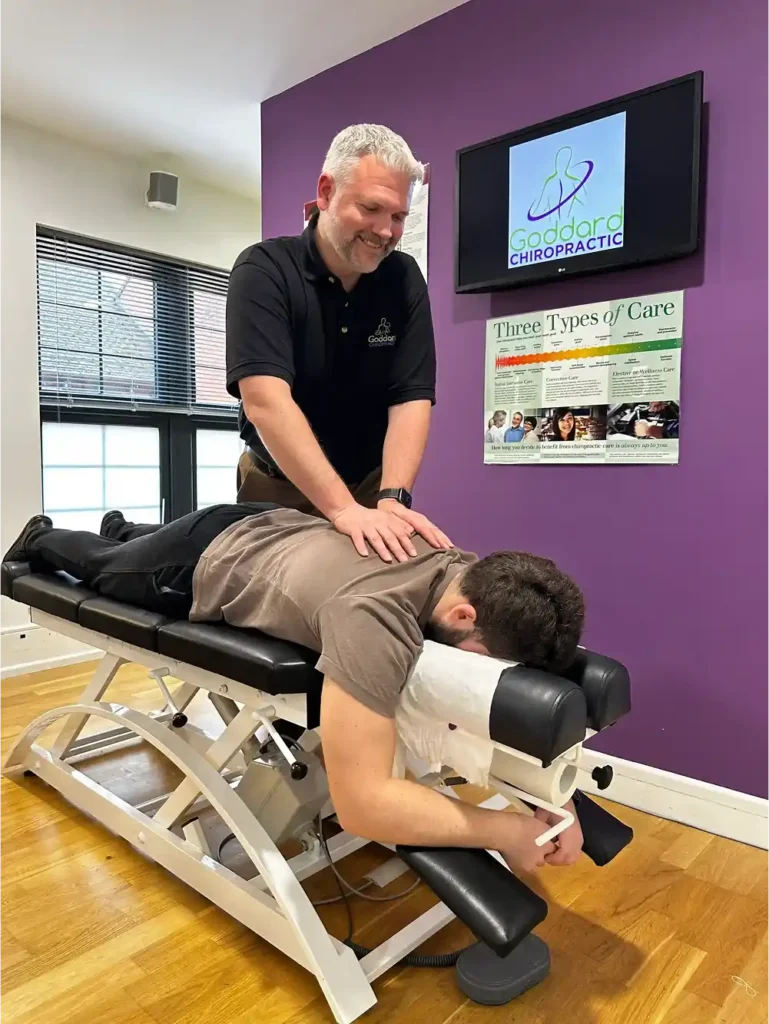
Chiropractic Adjustments
When spinal joints become restricted, movement becomes less efficient.
Gentle chiropractic adjustments help restore mobility, reduce stress on surrounding tissues, and improve overall function.
Postural Assessment
Many office workers unknowingly reinforce posture habits that contribute to pain.
Small changes to workstation setup and sitting mechanics can often make a significant difference.
Movement and Exercise Recommendations
The goal isn’t just pain relief.
It’s helping your body become more resilient so discomfort is less likely to return.
Lifestyle and Ergonomic Guidance
Sometimes the biggest improvements come from simple changes made throughout the workday.
Why More Office Workers Are Choosing Chiropractic Care
People often search for a lower back pain chiropractor in Reading because they’re looking for answers beyond medication.
And that’s understandable.
Painkillers may temporarily reduce discomfort, but they don’t address posture, movement, or spinal function.
Chiropractic care focuses on identifying the source of the problem while helping the body function more efficiently.
That’s why many people looking for a chiropractor in Reading for lower back pain choose chiropractic treatment as part of a long-term strategy for managing workplace discomfort.
Small Habits That Can Make a Big Difference
While treatment is important, daily habits matter too.
If you spend most of your day at a desk, consider:
- Standing up every 30–60 minutes
- Walking during phone calls
- Keeping screens at eye level
- Supporting your lower back while sitting
- Stretching your hips regularly
- Staying physically active outside work
These simple changes won’t solve every problem, but they can significantly reduce stress on your spine.
When Should You Seek Professional Help?
Occasional stiffness after a long day isn’t necessarily a cause for concern.
However, you should consider seeking help if:
- Pain is becoming more frequent
- Symptoms are affecting work performance
- Discomfort interferes with sleep
- Pain radiates into the hips or legs
- Home remedies no longer provide relief
The earlier the cause is identified, the easier it often is to address.
Frequently Asked Questions
What Is the Best Way to Sleep With Lower Back Pain?
Many people find sleeping on their side with a pillow between their knees helps reduce spinal stress. Back sleepers may benefit from placing a pillow beneath their knees for additional support.
Can Lower Back Pain Occur During Running?
Absolutely. Lower back pain during running can result from poor biomechanics, muscle imbalances, weak core stability, or underlying spinal issues. If symptoms persist, professional evaluation is recommended.
Do Pain Patches for Lower Back Pain Work?
Pain patches for lower back pain may provide temporary symptom relief for some individuals, but they generally don’t address the underlying causes of pain such as joint dysfunction, posture issues, or muscle imbalance.
Goddard Chiropractic Reading
Office work shouldn’t come with a side effect of chronic pain.
While desk job back pain, poor posture, and prolonged sitting are common, they’re not problems you have to simply accept.
The right combination of movement, posture awareness, and professional care can help restore comfort and improve how your body functions throughout the workday.
At Goddard Chiropractic, we help patients understand what’s causing their discomfort and create personalized plans for lasting relief.
If you’re experiencing ongoing workplace back pain or searching for a trusted lower back pain chiropractor in Reading, you can read more about our lower back pain services here: Lower Back Pain Care.
And when you’re ready to take the next step, you can book an appointment here: Schedule Your Visit