
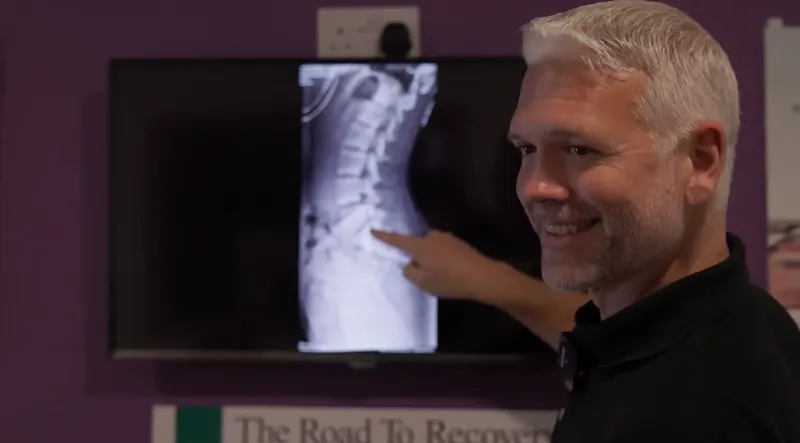
Imagine trying to solve a puzzle with half the pieces missing.
You might have a good idea of what the picture looks like, but you can never be completely certain until every piece is in place.
The same is true when it comes to diagnosing musculoskeletal conditions. Your symptoms tell part of the story. A physical examination reveals even more. But sometimes, to truly understand what’s happening beneath the surface, you need to see the bigger picture.
That’s where digital X-ray imaging comes in.
At Goddard Chiropractic, we believe every patient deserves a thorough assessment before treatment begins. Our advanced Digital X-Ray technology allows us to gain valuable insight into your spine, joints, and bones when clinically appropriate, helping us create a treatment plan that’s tailored to your needs.
So, what conditions can a digital X-ray actually detect?
Let’s take a closer look.
What Is a Digital X-Ray?
A digital X-ray is a modern form of diagnostic imaging that produces high-quality images of your bones and joints within seconds.
Unlike traditional film X-rays, digital radiography creates detailed images electronically, allowing your chiropractor to assess your musculoskeletal system quickly and accurately.
Digital X-rays are commonly used for:
- Bone imaging
- Spinal assessment
- Joint evaluation
- Postural analysis
- Injury assessment
- Monitoring changes over time
While not every patient requires imaging, when it is clinically indicated, it provides an invaluable window into how your body is functioning.
Why Might Your Chiropractor Recommend a Digital X-Ray?
Many people assume every chiropractic visit starts with an X-ray.
In reality, that’s not the case.
At Goddard Chiropractic, digital X-rays are only recommended when they will provide meaningful clinical information that helps guide your care.
For example, imaging may be appropriate if you have:
- Persistent back or neck pain
- A history of trauma or accidents
- Suspected structural abnormalities
- Ongoing joint pain
- Progressive changes in posture
- Symptoms that haven’t responded to previous treatment
Rather than relying on guesswork, a diagnostic scan can help ensure treatment decisions are based on a clear understanding of what’s happening inside your body.
1. Spinal Misalignments and Postural Changes
Your spine does an incredible job every single day.
It supports your body, protects your nervous system, and allows you to move with remarkable flexibility.
But over time, poor posture, repetitive movements, injuries, or daily habits can influence spinal alignment.
A digital X-ray can help identify:
- Changes in spinal curvature
- Postural imbalances
- Vertebral positioning
- Degenerative changes
- Structural adaptations
This detailed spinal assessment allows your chiropractor to understand not only where discomfort exists, but why it may have developed.
2. Arthritis
Arthritis doesn’t happen overnight.
It develops gradually, often over many years, as cartilage wears down and joints change.
An X-ray for arthritis can reveal:
- Joint space narrowing
- Bone spurs
- Degenerative joint disease
- Changes in joint surfaces
Understanding the severity of arthritis helps guide treatment recommendations and allows realistic goals to be set for improving movement and reducing discomfort.
3. Fractures and Previous Bone Injuries
Not every fracture is obvious.
Some small fractures can initially go unnoticed, particularly after falls or sporting injuries.
An X-ray for fractures allows clinicians to identify:
- Acute fractures
- Healing fractures
- Previous injuries
- Bone alignment following trauma
Recognising these findings is essential before beginning any manual treatment.
4. Chronic Back Pain
Back pain is one of the most common reasons people seek chiropractic care.
But here’s something many people don’t realise:
Back pain is a symptom.
Not a diagnosis.
There are many possible causes, including:
- Degenerative changes
- Joint dysfunction
- Previous injuries
- Structural variations
- Arthritic changes
When clinically appropriate, imaging for back pain provides valuable information about the structures contributing to your symptoms.
Combined with a thorough examination, it helps build a more complete picture of your spinal health.
5. Neck Pain
The neck supports the weight of your head every moment of the day.
Poor posture, prolonged desk work, sporting injuries, and age-related changes can all influence how your cervical spine functions.
An X-ray for neck pain may reveal:
- Loss of normal cervical curve
- Degenerative changes
- Joint wear
- Previous trauma
- Alignment concerns
This information helps ensure treatment is appropriate, safe, and personalised.
6. Shoulder and Joint Pain
Sometimes shoulder pain isn’t actually coming from the shoulder alone.
Pain may originate from nearby joints or the cervical spine.
A digital X-ray can assist with bone and joint imaging, helping identify:
- Arthritic changes
- Bone abnormalities
- Joint degeneration
- Structural changes affecting movement
7. Scoliosis
Scoliosis is a sideways curvature of the spine that varies from person to person.
Some curves remain stable for years.
Others gradually progress.
Digital X-ray imaging allows your chiropractor to:
- Measure spinal curves accurately
- Monitor progression
- Assess posture
- Track treatment outcomes over time
This objective information is essential for creating an appropriate management plan.
8. Disc and Degenerative Changes
Although spinal discs themselves are not directly visible on X-rays, surrounding changes often provide important clues.
Digital imaging may reveal:
- Reduced disc spacing
- Bone spurs
- Degenerative spinal changes
- Joint wear
These findings help explain why certain symptoms may be developing and assist in determining the most appropriate treatment approach.
What a Digital X-Ray Cannot Detect
It’s important to understand that every form of imaging has strengths.
A digital X-ray is excellent for viewing bones and joints.
However, it is not designed to assess:
- Muscles
- Ligaments
- Tendons
- Spinal discs in detail
- Nerves
If another form of musculoskeletal imaging, such as MRI or CT, is more appropriate, your healthcare provider may recommend further investigation.
The goal is always to choose the right imaging for the right situation.
Why Digital X-Rays Are Valuable in Chiropractic Care
One of the greatest benefits of a chiropractic X-ray is confidence.
Confidence that treatment is based on accurate clinical information.
Confidence that underlying structural concerns have been identified.
Confidence that your care is personalised to your unique spine.
At Goddard Chiropractic, digital imaging is never used routinely. It is only recommended when it adds genuine clinical value and supports better decision-making.
That’s an important distinction.
Because healthcare should never be about taking unnecessary images.
It should be about taking the right ones, for the right reasons.
Why Choose Goddard Chiropractic for Digital X-Rays in Reading?
Having advanced imaging available within the clinic makes the assessment process more efficient and convenient for patients.
As a Digital X-Ray Chiropractor in Reading, our team can combine a detailed clinical examination with high-quality diagnostic imaging when clinically appropriate.
This means you won’t need to travel elsewhere simply to gain a clearer understanding of your condition.
If you’re looking for a Chiropractor with Digital X-Ray in Reading, you’ll benefit from an integrated approach that focuses on understanding the root cause of your symptoms before recommending treatment.
Seeing the Bigger Picture
Pain doesn’t always tell the whole story.
Sometimes the real answer lies beneath the surface.
A digital X-ray isn’t about looking for problems that don’t exist. It’s about gaining clarity when more information is needed.
Whether you’re experiencing persistent back pain, neck pain, joint discomfort, or recovering from an injury, advanced diagnostic imaging can help ensure your treatment starts with knowledge rather than assumptions.
At Goddard Chiropractic, every recommendation begins with listening to your story, understanding your goals, and carrying out a thorough assessment. When clinically appropriate, our Digital X-Ray in Reading provides another important piece of the puzzle, allowing us to develop a care plan that’s tailored specifically to you.
Because the more clearly we understand your body, the better we can help you move, recover, and get back to doing the things you love.
FAQs
Do I need a digital X-ray before chiropractic treatment?
Not always. At Goddard Chiropractic, we only recommend a digital X-ray when it is clinically appropriate. Many patients can be assessed through a detailed consultation and physical examination alone. If imaging is needed to better understand your condition or rule out underlying issues, we’ll explain why and discuss the next steps with you.
What can a digital X-ray detect?
A digital X-ray can detect a variety of musculoskeletal conditions, including fractures, arthritis, spinal alignment changes, scoliosis, joint degeneration, and other bone abnormalities. It is an important form of diagnostic imaging that helps chiropractors make informed treatment decisions when clinically indicated.
Can a digital X-ray show the cause of back pain?
A digital X-ray can identify structural changes that may be contributing to back pain, such as arthritis, spinal degeneration, scoliosis, or previous fractures. While not every cause of back pain is visible on an X-ray, it provides valuable information that complements your clinical examination.
Can a digital X-ray diagnose neck pain?
A digital X-ray for neck pain can reveal issues such as reduced cervical curvature, arthritis, degenerative changes, or previous injuries affecting the cervical spine. Your chiropractor will determine whether imaging is appropriate based on your symptoms and medical history.
Is a digital X-ray safe?
Yes. Modern digital radiography uses significantly lower levels of radiation than older film X-rays while producing high-quality images. At Goddard Chiropractic, X-rays are only recommended when the clinical benefits outweigh any potential risks.
Can a digital X-ray detect arthritis?
Yes. An X-ray for arthritis is one of the most effective ways to identify joint space narrowing, bone spurs, and other degenerative changes associated with osteoarthritis. These images help your chiropractor understand the extent of joint changes and tailor your treatment accordingly.
Can a digital X-ray show muscle or ligament injuries?
No. Digital X-rays are designed to assess bones and joints rather than soft tissues. Conditions affecting muscles, ligaments, tendons, or spinal discs may require other forms of musculoskeletal imaging, such as an MRI or ultrasound, if clinically necessary.