
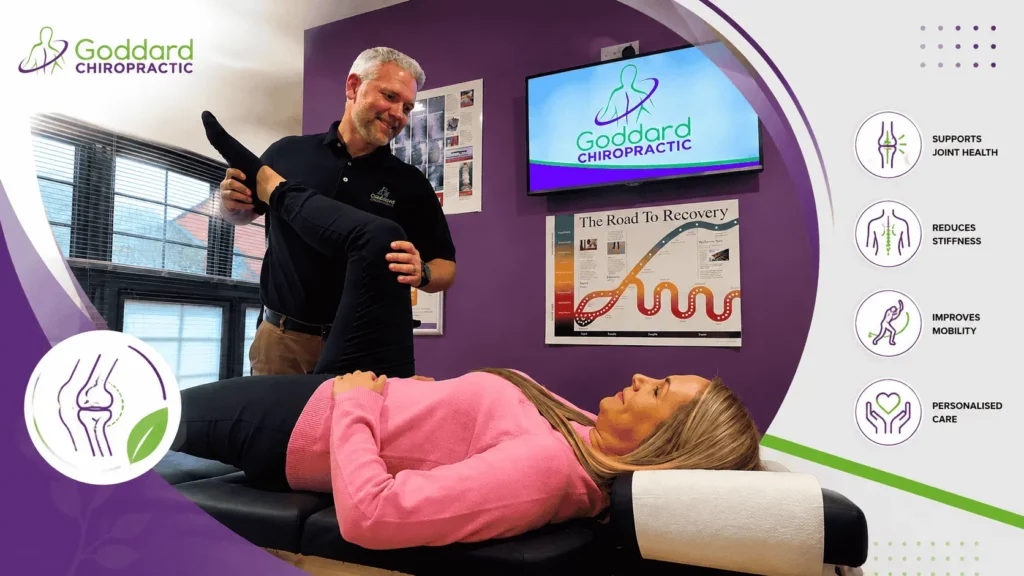
Osteoarthritis is one of the most common causes of joint pain, affecting millions of people and becoming increasingly common with age. Simple activities like climbing the stairs, walking the dog, gardening, or even getting out of bed can become more challenging as joints become stiff and uncomfortable. While many people assume joint pain is simply a part of getting older, persistent pain should never be ignored.
If you’re looking for osteoarthritis treatment in Reading, it’s important to understand that effective management focuses on reducing pain, improving mobility, and helping you stay active. Although osteoarthritis cannot currently be cured, many people find relief through a combination of exercise, lifestyle changes, and conservative treatments. Chiropractic care may also form part of a broader management plan by helping improve joint movement, reduce mechanical stress, and support overall musculoskeletal health.
At Goddard Chiropractic, we provide personalised care for people experiencing osteoarthritis and joint pain. Our goal is not simply to manage symptoms but to understand how your joints, muscles, posture, and movement patterns work together so we can create a treatment plan tailored to your individual needs.
What Is Osteoarthritis?
Osteoarthritis is a degenerative joint condition that occurs when the cartilage protecting the ends of bones gradually wears down over time. Healthy cartilage allows joints to move smoothly while absorbing everyday forces placed upon them. As this protective layer deteriorates, the joint becomes less efficient at cushioning movement, which may lead to pain, stiffness, swelling, and reduced mobility.
Although osteoarthritis is often linked with ageing, it isn’t simply the result of getting older. Previous injuries, repetitive strain, excess body weight, genetics, physically demanding occupations, and muscle weakness can all contribute to the development of the condition. Many people develop osteoarthritis gradually over several years before symptoms become noticeable.
The condition most commonly affects weight-bearing joints such as the knees and hips, but it can also affect the spine, neck, shoulders, hands, and feet. Depending on the affected joint, symptoms can range from occasional stiffness to persistent discomfort that interferes with work, exercise, hobbies, and everyday activities.
Common Symptoms of Osteoarthritis
Symptoms often develop gradually rather than appearing suddenly. Many people notice stiffness first, particularly in the morning or after sitting for long periods. As the condition progresses, pain may occur more frequently during movement or after physical activity.
Common symptoms include:
- Persistent joint pain
- Morning stiffness lasting less than 30 minutes
- Reduced flexibility
- Difficulty moving the affected joint
- Swelling around the joint
- Grinding, clicking, or cracking sensations
- Reduced range of motion
- Tenderness when touching the joint
- Pain after exercise or prolonged activity
- Difficulty walking, climbing stairs, or standing for long periods
Many people also experience periods where symptoms suddenly become worse before settling again. These episodes are commonly referred to as osteoarthritis flare-ups.
What Causes Osteoarthritis?
Osteoarthritis develops when the natural balance between cartilage breakdown and repair changes over time. As cartilage becomes thinner, surrounding structures such as ligaments, muscles, and bones may also be affected, contributing to stiffness and discomfort.
Several factors may increase your risk of developing osteoarthritis, including:
- Increasing age
- Previous joint injuries
- Repetitive movements at work
- Sports injuries
- Excess body weight
- Family history
- Poor joint alignment
- Muscle weakness
- Reduced physical activity
While some risk factors cannot be changed, improving strength, maintaining a healthy weight, and staying physically active can help support long-term joint health.
How Chiropractic Care May Support Osteoarthritis
While chiropractic care cannot cure osteoarthritis or restore damaged cartilage, it may help improve joint mobility, reduce stiffness, and support better movement as part of a personalised treatment plan.
At Goddard Chiropractic, your care begins with a comprehensive assessment to understand your symptoms and determine the most appropriate approach. Depending on your needs, treatment may include:
- Gentle joint mobilisation
- Chiropractic adjustments (where appropriate)
- Soft tissue therapy
- Rehabilitation exercises
- Postural assessment and advice
- Home exercises and lifestyle guidance
By improving movement and addressing muscle imbalances around affected joints, chiropractic care may help reduce unnecessary strain and support better day-to-day function.
How Chiropractic Care May Help Improve Joint Function
A personalised chiropractic care plan may include several different treatment approaches depending on your symptoms and overall health.
Gentle Joint Mobilisation
Restricted joints often become even stiffer when movement decreases. Gentle mobilisation techniques aim to improve normal joint movement, helping many patients feel less restricted during everyday activities.
Soft Tissue Therapy
Muscles surrounding arthritic joints often become tight as the body tries to protect the painful area. Soft tissue techniques may help reduce muscle tension and improve flexibility, making movement feel more comfortable.
Rehabilitation Exercises
Exercise is widely recognised as one of the most important parts of osteoarthritis management. Specific strengthening and mobility exercises can improve joint stability, support surrounding muscles, and encourage healthier movement patterns.
Postural Assessment
Poor posture or altered biomechanics may increase pressure on already sensitive joints. Identifying and addressing these issues can help reduce unnecessary mechanical stress during daily activities.
Lifestyle Advice
Long-term management often extends beyond the treatment room. We provide guidance on activity modification, home exercises, workplace ergonomics, and movement strategies that may help support healthier joints over time.
Which Joints Are Commonly Affected?
Osteoarthritis can affect almost any joint, although certain areas are more commonly involved.
- Knee osteoarthritis frequently causes pain when walking, climbing stairs, kneeling, or standing from a seated position. Many people notice stiffness after resting and discomfort during longer walks.
- Hip osteoarthritis often produces pain around the groin, thigh, or buttock. It may affect balance, walking speed, and overall mobility.
- Spinal osteoarthritis may contribute to stiffness in the neck or lower back, making everyday movements more difficult. Reduced spinal mobility can sometimes place additional stress on surrounding muscles.
- Shoulder osteoarthritis may cause discomfort when reaching overhead, lifting objects, or sleeping on the affected side.
Regardless of which joint is affected, treatment should always begin with an accurate assessment to identify the factors contributing to your symptoms.
The Importance of Accurate Diagnosis
Joint pain is not always caused by osteoarthritis. Conditions such as rheumatoid arthritis, tendon injuries, bursitis, ligament problems, and referred pain from the spine can produce similar symptoms.
This is why a comprehensive assessment is essential before beginning treatment.
At Goddard Chiropractic, your assessment may include a review of your medical history, movement analysis, orthopaedic testing, neurological examination where appropriate, and Digital X-Ray Imaging if clinically indicated. Understanding exactly what is causing your symptoms allows us to recommend the most appropriate course of care.
Managing Osteoarthritis Beyond Treatment
Successful osteoarthritis management usually involves more than hands-on care alone. Research consistently supports a combination of treatment, exercise, education, and lifestyle changes.
Simple strategies that may help include:
- Maintaining a healthy body weight
- Staying physically active
- Strengthening muscles around affected joints
- Improving flexibility
- Taking regular movement breaks if you sit for long periods
- Wearing supportive footwear where appropriate
- Managing activity levels during flare-ups rather than stopping movement completely
Small changes performed consistently often make a meaningful difference over time.
When Should You Seek Professional Advice?
While occasional aches after physical activity are common, persistent joint pain deserves professional assessment.
You should consider booking an appointment if you experience:
- Joint pain lasting more than a few weeks
- Increasing stiffness
- Difficulty performing everyday activities
- Pain affecting your sleep
- Swollen or unstable joints
- Reduced movement
- Symptoms that continue despite self-management
Early assessment may help identify the cause of your symptoms and allow appropriate management before the condition begins to affect your daily life further.
Osteoarthritis Treatment In Reading – Why Choose Goddard Chiropractic?
At Goddard Chiropractic, we understand that every patient experiences osteoarthritis differently. Rather than offering the same treatment to everyone, we carry out a detailed assessment to understand how your condition affects your movement, lifestyle, and goals.
Our integrated approach combines chiropractic care, rehabilitation, soft tissue therapy, postural assessment, and lifestyle advice to create a personalised treatment plan designed around your individual needs. Where clinically appropriate, on-site Digital X-Ray Imaging also helps us gain a clearer understanding of your spinal health and joint function.
Whether your goal is walking more comfortably, staying active, enjoying hobbies again, or simply reducing everyday stiffness, our team is committed to helping you move with greater confidence.
Conclusion
Living with osteoarthritis doesn’t necessarily mean giving up the activities you enjoy. Although the condition cannot currently be reversed, the right combination of professional care, exercise, education, and healthy lifestyle choices can help many people improve mobility and manage symptoms effectively.
If you’re looking for osteoarthritis treatment in Reading, our experienced team at Goddard Chiropractic can assess your symptoms, explain your treatment options, and determine whether chiropractic care may be an appropriate part of your overall management plan. Contact us today!
Frequently Asked Questions
Is osteoarthritis a disability?
Osteoarthritis is not automatically classed as a disability. However, if it substantially and long-term limits your ability to carry out normal daily activities, it may meet the legal definition of a disability depending on your individual circumstances.
How long do osteoarthritis flare-ups last?
Flare-ups vary from person to person. Some last only a few days, while others may continue for several weeks. Managing activity levels, following professional advice, and maintaining regular movement may help reduce the impact of flare-ups.
Does osteoarthritis spread?
Osteoarthritis does not spread from one joint to another like an infection. However, it is possible for multiple joints to develop osteoarthritis over time, particularly due to ageing, previous injuries, genetics, or lifestyle factors.
Should I wear a knee brace for osteoarthritis?
A knee brace may provide additional support for some people with knee osteoarthritis, but it is not suitable for everyone. The most appropriate option depends on the severity of your symptoms, your activity level, and the underlying cause of your knee pain. Professional assessment can help determine whether a brace is likely to be beneficial.
Can chiropractic care help people with osteoarthritis?
Chiropractic care cannot cure osteoarthritis or reverse cartilage damage. However, after a thorough assessment, it may help some people improve joint mobility, reduce stiffness, support movement, and complement a broader management plan that includes exercise and lifestyle advice.
Disclaimer
This article is intended for general educational purposes only and should not be considered medical advice. Osteoarthritis symptoms and appropriate treatment options vary between individuals. Always seek assessment from a qualified healthcare professional before beginning any new treatment or exercise programme. At Goddard Chiropractic, treatment recommendations are based on a comprehensive clinical assessment and individual patient needs.