
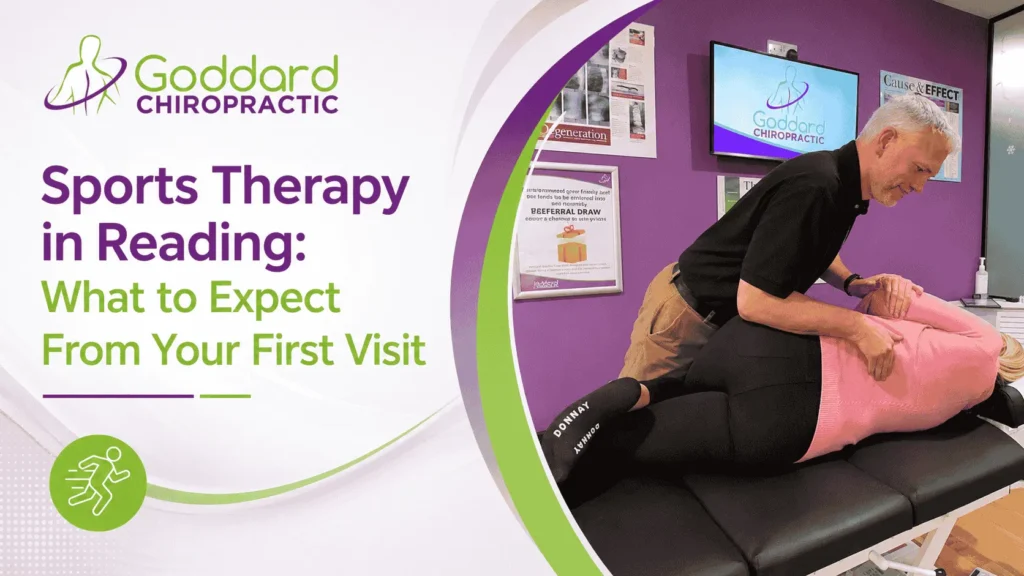
Walking into a sports therapy clinic for the first time can feel a little like starting a new chapter.
You might arrive with a sore shoulder that’s stopped you enjoying the gym. Maybe your knee has been aching every time you go for a run. Perhaps you’ve been living with back pain for months and are finally ready to find out why it keeps coming back.
Whatever has brought you here, you’re probably wondering the same thing:
“What actually happens during sports therapy?”
The good news is that your first appointment isn’t about being rushed onto a treatment table. It’s about understanding your story.
At Goddard Chiropractic, we believe every injury, every ache and every movement tells us something. Before we think about treatment, we want to understand what your body has been trying to say.
So, if you’re considering Sports Therapy in Reading, here’s exactly what you can expect from your first visit.
First Things First… What Is Sports Therapy?
Despite its name, sports therapy isn’t just for athletes.
In fact, many of the people who visit a sports therapist have never run a marathon or stepped onto a football pitch.
Sports therapy focuses on helping people recover from injuries, improve movement, restore function, and reduce the risk of future problems. Whether your pain started during a workout, after gardening, while lifting at work, or simply from years of repetitive movement, sports therapy is designed to help your body move the way it was intended to.
If you’ve ever wondered what is sports therapy, think of it as combining assessment, hands-on treatment, movement education and guided rehabilitation to help you return to doing what you love.
Your First Visit Starts With a Conversation
Before anyone begins treatment, we begin by listening.
Your appointment starts with a detailed discussion about:
- What brought you to the clinic
- When your symptoms started
- What makes them better or worse
- Your lifestyle, work and hobbies
- Previous injuries or surgeries
- Your goals for recovery
Sometimes the smallest detail can unlock the biggest clue.
Perhaps your shoulder only hurts after working at your desk all day.
Maybe your knee pain began after changing your running shoes.
Or perhaps your back pain started so gradually that you can’t remember when it first appeared.
These conversations help us understand the whole picture, not just the painful part.
A Thorough Movement Assessment
Next comes the assessment.
This isn’t about passing or failing.
It’s about discovering how your body moves.
Your sports therapist will assess:
- Your posture
- Joint mobility
- Muscle strength
- Balance
- Flexibility
- Walking or running mechanics where appropriate
You may also perform simple movements such as squatting, bending, reaching or standing on one leg.
Why?
Because pain rarely exists in isolation.
Sometimes the area that hurts isn’t actually the area causing the problem.
Movement tells a story that symptoms alone cannot.
Understanding the Root Cause
One of the biggest misconceptions about injury rehabilitation is that treatment should focus only on where it hurts.
But imagine a leaking roof.
You could keep placing buckets underneath the drip.
Or you could climb up and repair the damaged tiles.
Sports therapy takes the second approach.
Rather than simply calming symptoms, we look for the underlying factors contributing to them.
These might include:
- Muscle weakness
- Joint stiffness
- Poor movement patterns
- Previous injuries
- Training overload
- Reduced flexibility
Understanding the “why” is often the first step towards lasting recovery.
Hands-On Treatment
Once your assessment is complete, treatment may begin during your first appointment.
Depending on your condition, this could include manual therapy techniques designed to reduce pain, improve movement and encourage healing.
Treatment may involve:
- Joint mobilisation
- Soft tissue release
- Muscle stretching
- Trigger point therapy
- Movement correction techniques
Every treatment is tailored to your individual needs because no two injuries are exactly alike.
Soft Tissue Therapy: Helping Muscles Recover
Healthy muscles should move freely.
When they become tight, overworked or injured, they lose efficiency.
That’s where soft tissue therapy plays an important role.
Soft tissue therapy focuses on improving the health of muscles, tendons and connective tissues to encourage better movement and support muscle recovery.
This may help reduce:
- Muscle tightness
- Stiffness
- Restricted movement
- Training soreness
- Overuse injuries
Sports Massage vs Sports Therapy: What’s the Difference?
This is one of the questions we hear most often.
Both treatments involve hands-on care, but they have different goals.
Sports massage primarily focuses on improving muscle health, reducing tension and supporting recovery.
Sports therapy looks at the bigger picture.
It combines assessment, treatment, rehabilitation exercises and movement correction to help resolve the underlying cause of an injury.
In many cases, sports massage and therapy work together beautifully, providing both immediate relief and long-term recovery.
Rehabilitation Exercises You’ll Continue at Home
Your recovery doesn’t stop when you leave the clinic.
In fact, some of the most important progress happens afterwards.
Based on your assessment, your sports therapist may recommend personalised rehabilitation exercises to perform between appointments.
These exercises are carefully selected to:
- Restore strength
- Improve mobility
- Build stability
- Correct movement patterns
- Reduce the risk of future injury
They’re designed to fit into your daily routine, helping you make steady progress without overwhelming you.
Can Sports Therapy Help Back Pain?
Absolutely.
Many people assume sports therapy is only for sporting injuries, but it can be highly effective for everyday musculoskeletal problems too.
If you’re wondering can sports therapy help back pain, the answer is often yes.
Back pain may be linked to:
- Muscle imbalance
- Poor posture
- Reduced spinal mobility
- Weak core muscles
- Movement dysfunction
By addressing these contributing factors, sports therapy aims to improve function and reduce recurring episodes rather than simply masking symptoms.
Can Sports Therapy Help Knee Pain?
Knees are remarkable joints.
But they rely on everything around them working well.
Hip weakness, ankle stiffness or poor movement patterns can all contribute to persistent knee discomfort.
If you’ve been asking can sports therapy help knee pain, the answer is that it often can, particularly when the cause relates to muscles, joints or movement mechanics.
Your sports therapist will assess the entire kinetic chain to understand what’s placing extra stress on the knee.
Injury Prevention Is Just as Important as Recovery
One of the most valuable aspects of sports therapy isn’t simply helping people recover.
It’s helping them avoid future injuries altogether.
Effective injury prevention involves:
- Improving movement quality
- Identifying muscle imbalances
- Building strength
- Enhancing flexibility
- Teaching better movement habits
Whether you’re training for your first 10K or simply want to stay active with your family, preventing injuries is always easier than recovering from them.
Supporting Every Stage of Recovery
Healing isn’t always a straight line.
Some days you’ll feel stronger.
Other days progress may seem slower.
That’s completely normal.
Sports therapy supports every stage of sports injury rehabilitation, from reducing early discomfort to rebuilding confidence and returning to activity.
Through personalised musculoskeletal rehabilitation and muscle rehabilitation, your treatment evolves as your body improves.
Each session builds on the last, helping you move closer to your goals with confidence.
Your Journey Starts With Understanding
Your first sports therapy appointment isn’t about fixing everything in one visit.
It’s about gaining clarity.
Understanding why your body feels the way it does.
Learning how sports therapy works.
And discovering a plan that helps you move forward with confidence.
At Goddard Chiropractic, our experienced team takes the time to understand your goals, assess your movement, and create a personalised recovery plan that’s built around you…not just your symptoms.
If you’re looking for Sports Therapy in Reading, whether you’re recovering from an injury, managing ongoing pain, or hoping to prevent future problems, we’re here to help.
Together, we’ll help you move better, recover stronger, and get back to doing the things you love.
FAQs
What happens during sports therapy?
Your first appointment includes a detailed consultation, a movement assessment, hands-on treatment where appropriate, and a personalised rehabilitation plan. Your sports therapist will explain their findings and recommend the best approach for your recovery.
Is sports therapy only for athletes?
No. Sports therapy is suitable for anyone experiencing muscle, joint, or movement-related problems. Whether your symptoms are caused by sport, work, gardening, or everyday life, sports therapy can help restore function and improve mobility.
Can sports therapy help back pain?
Yes. Sports therapy can help many types of back pain by addressing muscle imbalances, improving movement patterns, increasing flexibility, and prescribing targeted rehabilitation exercises that support long-term recovery.
Can sports therapy help knee pain?
Yes. Knee pain is often influenced by the way your hips, ankles, muscles, and joints work together. A sports therapist will assess your movement to identify contributing factors and create a treatment plan tailored to your condition.
What’s the difference between sports massage and sports therapy?
Sports massage focuses primarily on relieving muscle tension and supporting recovery, while sports therapy includes a comprehensive assessment, hands-on treatment, rehabilitation exercises, and injury prevention strategies. They often work together as part of a complete recovery plan.
How many sports therapy sessions will I need?
The number of sessions varies depending on your condition, your goals, and how your body responds to treatment. Following your initial assessment, your sports therapist will discuss a personalised treatment plan and expected recovery timeline.
Disclaimer
This article is intended for informational purposes only and should not be considered medical advice, diagnosis, or treatment. Sports therapy outcomes vary depending on the nature and severity of the injury, individual health factors, and response to care. Always consult a qualified healthcare professional for an accurate assessment and personalised treatment recommendations. Seek prompt medical attention if you experience severe pain, sudden weakness, significant swelling, loss of sensation, or symptoms following a serious injury.